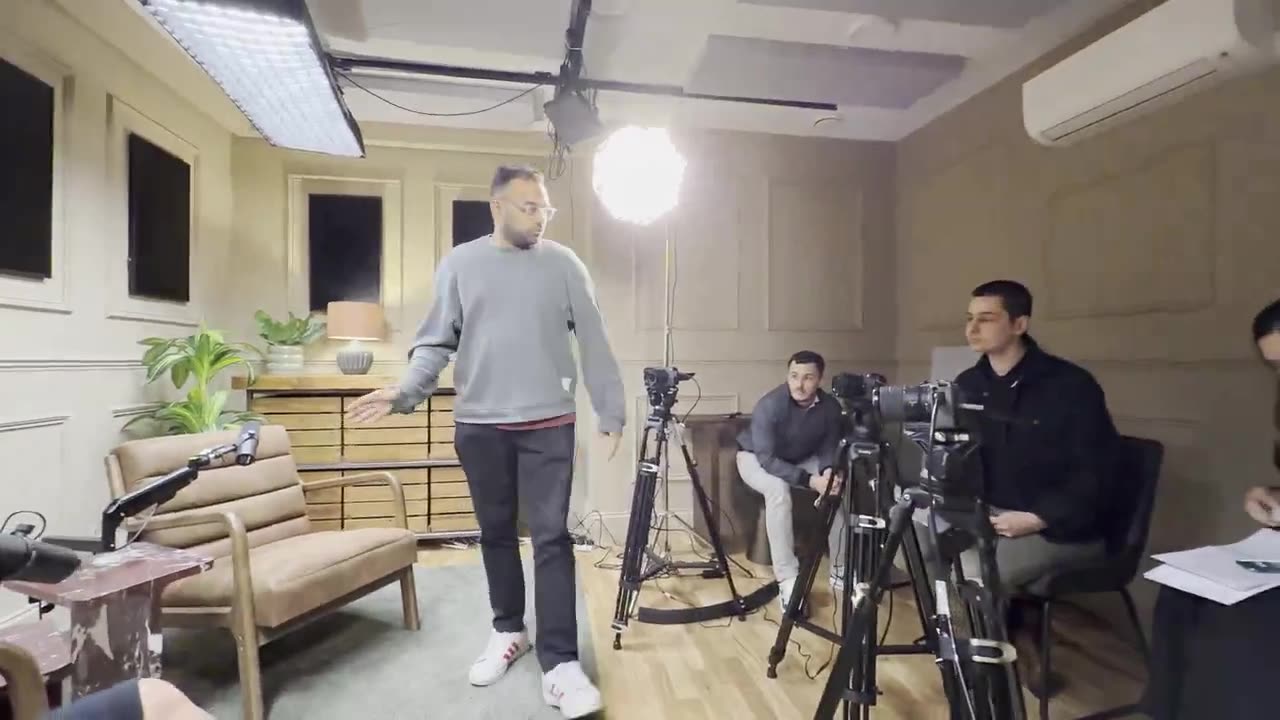
Production · 12 June 2026
What full production actually means
Hiring a videographer gets you footage. Full production gets you an outcome. Here is the difference, role by role.
Somewhere in your inbox is a quote for "a promo video". It probably arrived after you decided, quite rightly, that your business needs to look better online. And it probably describes a day of filming, some editing, and a deliverable. What it almost certainly does not describe is the thing you actually want: a business that looks more valuable, earns more trust and wins more of the right customers.
That gap, between buying a video and buying an outcome, is what the phrase full production exists to close.
The camera was never the hard part
Camera equipment has never been cheaper or better. A competent operator with a modern camera will give you sharp, stable, well-exposed footage of whatever happens to be in front of the lens. This is precisely the problem. Whatever happens to be in front of the lens is rarely a story, rarely a message, and almost never a reason for a stranger to choose your business over the one down the road.
When a film falls flat, the cause is almost never technical. It is that nobody decided what the film was for. Nobody asked which customer it should move, what doubt it should dissolve, what single idea the viewer should carry away. Equipment cannot answer those questions. People can.
The nine jobs hiding inside a good film
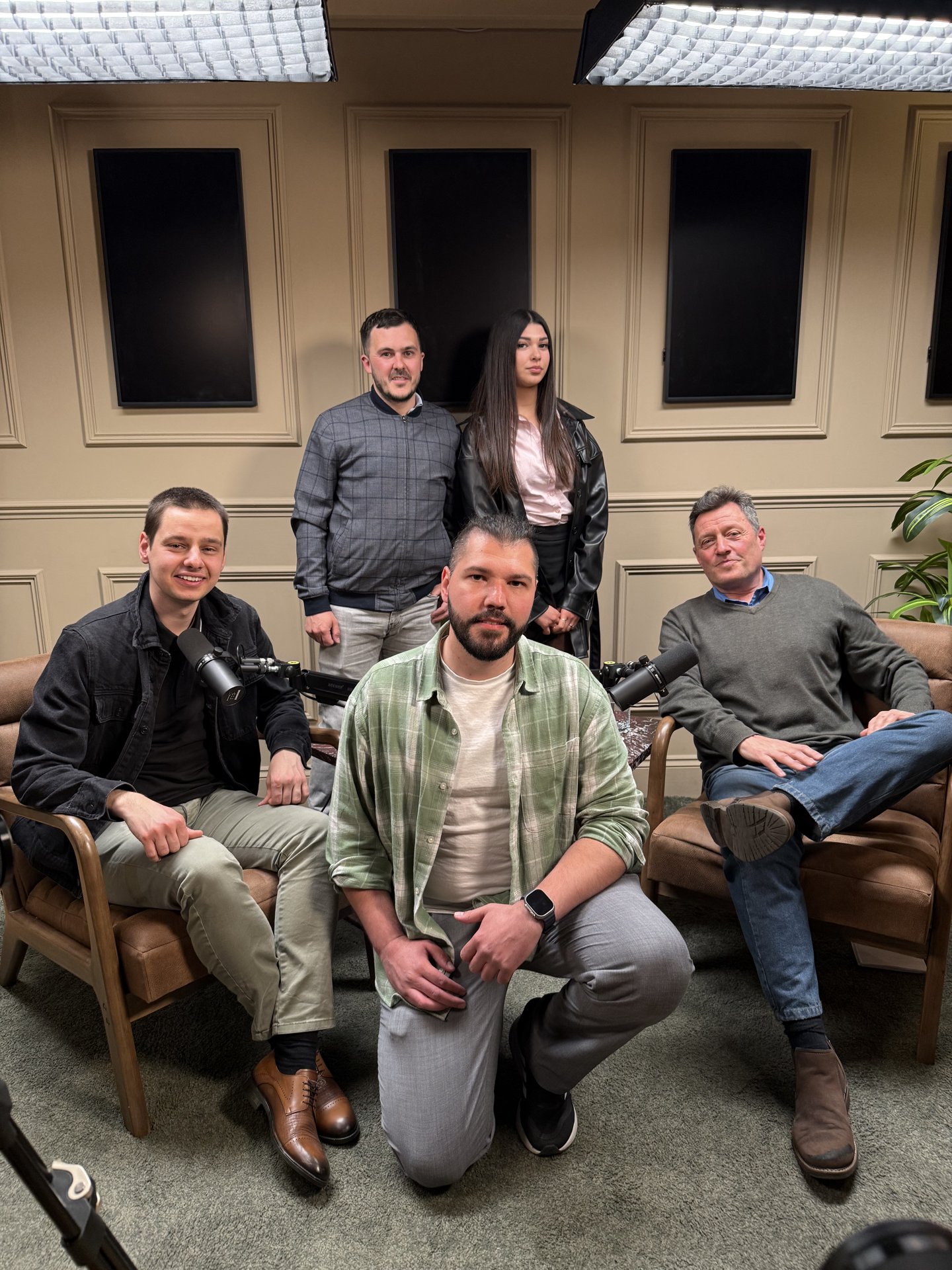
On a large production these are nine separate specialists. On a lean crew like ours, a few people carry several hats each. Either way, the work itself is non-negotiable, and it is what you are really buying.
The strategist works out what the film must achieve and for whom, before anyone touches a camera. The scriptwriter turns your expertise into words a stranger understands and remembers. The director coaxes real people, your people, into looking like themselves on camera, which is harder than it sounds and more valuable than it looks. The producer makes the shoot day land inside your working week without chaos.
On the day itself, camera and lighting decide whether your premises read as premium or tired, and sound quietly decides whether viewers stay or scroll: audiences forgive soft focus long before they forgive a thin, echoing voice. Afterwards, the editor and colourist cut the story to its strongest shape and grade every frame so the whole library carries one consistent, expensive look.
And then the role nearly every video company forgets: the web engineer, who gives the films somewhere worth living. A cinematic film embedded badly on a slow, confusing website is a suit worn with broken shoes.
Why this matters to a scaling business
If you are a founder doing £1M or more, your problem is rarely capability. It is that your digital presence undersells the quality of what you actually do. Buyers cannot see your operations, your standards or your people; they can only see what you publish. When what you publish is thin, they assume the business is too, and you end up competing on price against firms half as good.
Full production fixes the underselling at every layer at once: message, films, website, deployment. That is why it works where a one-off video does not. The film is one instrument; full production is the orchestra.
The honest test
Next time you receive a video quote, ask one question: "What happens before the shoot, and what happens after delivery?" If the answer before is "we turn up" and the answer after is "we send you the files", you are buying footage. If the answer involves message, scripts, direction, your website and your channels, you are buying an outcome.
We wrote about what that outcome looks like in practice on The Work, where you can watch an eleven-film library built for the least filmable industry in Britain and read what the same moves would do for yours. And if you would rather just ask, book a discovery call: thirty minutes, no obligation, and you keep the thinking either way.
Wondering how your own presence reads?
Send us your website and we will reply within three working days with three honest findings, ranked by impact. Free, no call required.
Book your discovery call
A few taps so we arrive already understanding you
What should this project achieve?
Pick the closest. We will refine it together.
Where is your presence today?
Honest answers make better proposals.
What would you like made?
Select everything that interests you. Unsure is fine too.
Roughly, your annual turnover?
This shapes the scale we recommend. Never shared.
When would you like to start?
We schedule a limited number of productions at a time.
Nearly there: your details
So we can reach you. No spam, ever.
Last step: when should we call?
Pick a time and we will be in touch.
Best time to call
How urgent is it?
Thank you, .
Your discovery call request is in.
What happens next
We review your answers and look at your current presence before we speak.
We call you within a few hours for a relaxed discovery conversation.
You receive a written proposal: the films, the site and the plan, quoted as one outcome.
Prefer to talk now?
WhatsApp us now